For years, iRacing has been the dominant destination for online simulated dirt oval racing. It introduced thousands of racers to organized online dirt competition, built a substantial community, and established itself as the primary platform for those looking to experience dirt racing from behind a virtual steering wheel.
But dominance has a way of breeding complacency. And when a company becomes the primary destination for a particular segment of the simulation community, it can sometimes begin to take that community for granted.
That appears to be exactly what is happening with dirt oval racing.
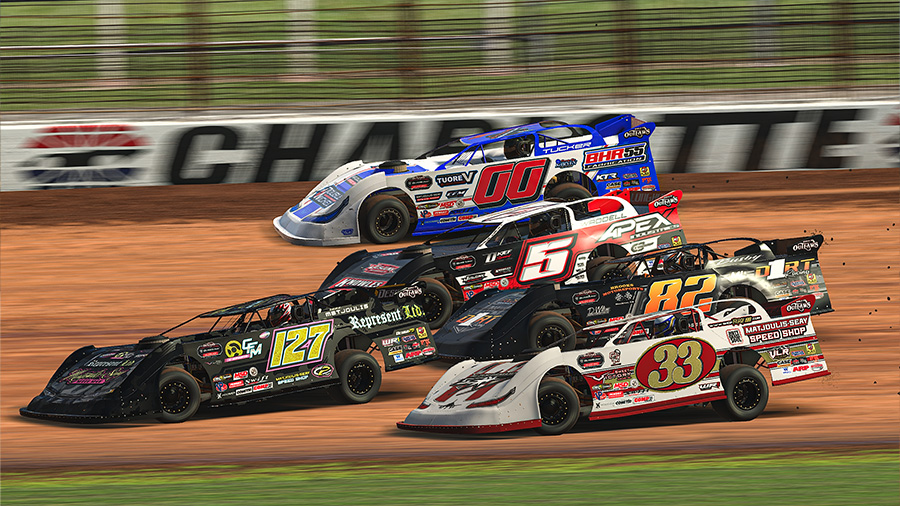
Frustration has been building for years. The complaints aren’t particularly complicated, nor are they difficult to understand. The selection of dirt tracks remains inadequate, development of the dirt car lineup has been painfully slow, and fundamental problems with vehicle physics and the dirt surface model continue to frustrate racers.
Perhaps even more troubling is the apparent lack of meaningful communication from iRacing. Community members have raised concerns, participated in lengthy forum discussions, and offered criticism of the existing simulation. Yet many feel their concerns have largely disappeared into a black hole of corporate silence.
The result is a growing sense that dirt oval racing has become an afterthought.
And when an established company leaves an opening that large, someone eventually comes along to fill it.
Enter DirtSim.
The Promise of iRacing’s Dirt Revolution
When iRacing introduced dirt oval racing, it represented a significant expansion of the simulation. Dirt racing had a dedicated following, but opportunities for organized online competition were considerably more limited than those available to pavement and road racers.
iRacing changed that.
The introduction of dirt racing brought sprint cars, late models, modifieds, and other dirt disciplines into a common online environment. Racers could compete against one another, participate in organized series, develop their skills, and experience the challenges of racing on a changing dirt surface.
It was an exciting development for a community that had long wanted a more sophisticated online dirt racing experience.
And to be fair, iRacing deserves credit for recognizing the potential of dirt oval racing and bringing it to a much larger audience.
 But introducing a racing discipline and continuing to develop it are two entirely different things.
Dirt racing is not simply pavement racing with a different texture underneath the tires. The surface is constantly evolving. Moisture changes, grooves develop, cushions form, and the racing line can change dramatically as cars circulate.
The cars themselves must respond convincingly to those changing conditions. Suspension behavior, tire characteristics, chassis dynamics, and the relationship between the vehicle and the surface are fundamental to the experience.
These are precisely the areas where many dirt oval racers believe iRacing has fallen short.
And years after the introduction of dirt racing, those concerns remain.
The Problem Isn’t Just a Lack of New Content
Let’s start with something relatively straightforward: tracks.
The selection of dirt tracks available in iRacing has long been a source of frustration. Dirt oval racing is built around variety. Different track configurations, banking, surface characteristics, and racing grooves produce dramatically different experiences.
A high-banked half-mile is not a quarter-mile bullring. A wide, sweeping dirt oval doesn’t race like a tight, technical track where drivers are constantly fighting for position and trying to find traction.
Track variety matters.
Real-world dirt racing has an enormous inventory of facilities, ranging from nationally recognized speedways to small regional tracks that have developed loyal followings over decades.
 Yet the available selection in iRacing remains limited relative to the breadth of the sport.
The same frustration applies to the car lineup. Dirt racers would certainly welcome additional cars and meaningful updates to existing ones. But simply adding another vehicle isn’t going to solve the more fundamental problems.
And that’s where the discussion becomes considerably more important.
The dirt oval community isn’t asking for another collection of paint schemes or minor cosmetic additions. It wants cars that behave convincingly. It wants a surface model that produces believable racing conditions. It wants the relationship between the tires, chassis, and track to feel like dirt racing rather than an approximation of it.
Those are not unreasonable expectations. They’re the foundation of a racing simulator.
The Dirt Racing Refresh: A Missed Opportunity
iRacing recognized that its dirt racing experience needed attention. In 2023, the company announced its Dirt Racing Refresh, promising improvements to the underlying dirt racing systems.
The initiative addressed several areas, including soil water content, tire behavior, vehicle physics, and changing track conditions.
On paper, it sounded promising.
The community had been asking for improvements, and the announcement suggested that iRacing was finally prepared to address some of the longstanding concerns.
Unfortunately, announcements and results are two different things.
For many racers, the Dirt Racing Refresh failed to deliver the meaningful improvements they had hoped for. Some felt the changes actually made certain aspects of the experience worse.
Rather than representing a substantial step forward, the refresh left many wondering what had really been accomplished.
 There is a difference between changing a system and improving it. A development team can introduce new parameters, adjust values, and modify the way a surface behaves. But if the resulting experience doesn’t produce more convincing racing, what exactly has been achieved?
The purpose of a dirt surface model isn’t to create the appearance of changing conditions. It’s to reproduce the consequences of those conditions.
A track should evolve in ways that make sense. Drivers should be able to recognize and respond to changing grip levels. The cars should react naturally to the surface beneath them.
If those fundamentals aren’t working convincingly, adding another layer of simulated complexity doesn’t necessarily make the simulation better.
A refresh that leaves customers questioning whether anything actually improved isn’t much of a refresh.
It’s a new label on an old problem.
The Dirt Community Isn’t Asking for AI. It’s Asking for Better Dirt Racing.
There is something particularly frustrating about watching development attention go toward features that aren’t necessarily addressing the most pressing concerns of the existing community.
Artificial intelligence in racing simulations has its place. AI opponents can be useful for practice, testing, and people who prefer racing without joining an online session.
But AI isn’t what has been driving the frustration among many dirt oval racers.
The dirt oval community isn’t sitting around waiting for AI opponents. It isn’t clamoring for another development announcement or some shiny new feature that looks impressive in a promotional video.
It wants more tracks.
It wants cars that behave convincingly.
 It wants a dirt surface model that produces believable racing conditions.
And above all, it wants evidence that iRacing recognizes these shortcomings and intends to address them.
There is nothing wrong with developing additional features. But when fundamental aspects of the existing product remain sources of widespread frustration, priorities matter.
A racing simulator should get the racing right first.
Everything else is secondary.
Silence Is a Terrible Customer Relations Strategy
Perhaps the most damaging aspect of the current situation isn’t even the lack of new content. It’s the apparent breakdown in communication.
Members have raised concerns. Forum discussions have continued. Racers have offered observations, criticisms, and suggestions based on years of experience with dirt racing.
Yet many community members feel there has been little meaningful acknowledgment or response to their current concerns.
That’s a problem.
A company doesn’t have to agree with every criticism. It doesn’t have to implement every suggestion. And it certainly doesn’t have to redesign its entire development schedule because somebody on a forum doesn’t like the way a sprint car handles.
But it should communicate.
Even a straightforward explanation that a particular problem is understood, that development resources are committed elsewhere, or that a proposed change isn’t technically feasible would be better than leaving customers to wonder whether anybody is listening.
 Silence creates an information vacuum. And when customers are left to fill that vacuum themselves, the conclusions aren’t usually flattering.
iRacing operates a subscription-based service. Members invest not only in subscriptions but also in cars, tracks, and the considerable time required to develop their skills.

Next Level Racing Wheel Stand 2.0
Master your laps without dominating the room. The Next Level Racing Wheel Stand 2.0 stands rock-solid for direct-drive wheels, yet folds away in seconds when real life calls. Full adjustability for wheel, pedals, and shifter lets a man settle into his proper position the honest way. A clever chair cradle keeps your seat planted under hard braking, while predrilled mounts welcome Thrustmaster, Fanatec, Logitech, and the rest. Upgrade later to a full cockpit with the GTSeat add-on. Serious performance, sensible footprint—no compromises required.
Buy on AmazonAffiliate link • Ships fast from Amazon
That creates an expectation of continued development.
Nobody expects every discipline to receive equal attention every season. iRacing serves a tremendous variety of racing interests, and development resources are finite.
But there is a difference between prioritizing certain projects and allowing an entire segment of the community to feel like an afterthought.
Dirt oval racers aren’t asking for special treatment. They’re asking for the same basic consideration afforded to customers in other disciplines.
And when that consideration appears to be missing, people eventually begin looking for alternatives.
When Customers Stop Waiting
There is an old business lesson that seems to get forgotten with remarkable frequency: Customers aren’t obligated to remain loyal to a product simply because they’ve used it for years.
Loyalty is earned through continued effort, improvement, and an understanding of what customers actually want.
A dominant position in a market isn’t a permanent entitlement.
iRacing helped establish the modern online dirt racing community, but that doesn’t mean it owns the future of simulated dirt racing.
If anything, the current frustration illustrates the danger of allowing a specialized community to believe that its interests have become secondary.
When customers believe the company providing their racing experience has stopped listening, they begin looking for someone who will.
That’s not disloyalty. That’s competition.
And competition is precisely what a stagnant market needs.
Enter DirtSim: A Different Approach to Dirt Racing
This is where DirtSim becomes particularly interesting.
Rather than simply offering another collection of cars and tracks within an established simulation, DirtSim represents an entirely separate effort to build a dedicated dirt racing experience.
Its origins are connected to a long history of dirt racing simulation, but its development direction is distinctly different.
I recently spoke with DirtSim developer Howard Weaver, who clarified an important point about the project’s history.
Dirt Track Racing 2.5 was a modified version of the original Dirt Track Racing 2. DirtSim, however, is an entirely separate undertaking. The development team began experimenting with Unreal Engine and eventually developed DirtSim as an independent simulation.
That distinction matters.
DirtSim isn’t simply an updated version of an older game with a new name and a fresh coat of paint. It represents a new development effort built around a different technology and its own ambitions.
 And the timing couldn’t be more interesting.
While portions of the iRacing dirt community have grown increasingly frustrated with the direction of their existing platform, DirtSim is working toward a dedicated alternative.
The project has an opportunity to address precisely the areas where many racers believe the existing experience has fallen short: vehicle behavior, dynamic track conditions, and the overall authenticity of dirt racing.
Its feature set also points toward a broader online racing environment, including organized competition, driver ratings, racecraft scoring, ranked racing, replays, photo mode, and support for grids of up to 64 drivers.
These aren’t insignificant ambitions.
DirtSim isn’t simply trying to put a few cars on a dirt oval and call it a racing simulator. The objective is to build an environment around the entire dirt racing experience.
And that’s exactly what the community needs more of.
Unreal Engine and the Opportunity to Build Something Different
One of the more intriguing aspects of DirtSim is its use of Unreal Engine.
The technology provides a modern foundation for developing the visual environment, rendering, and supporting systems of a racing simulation.
But the engine itself isn’t the selling point.
A beautiful racing simulator with poor physics is still a poor racing simulator. Nobody is going to forget about questionable vehicle behavior simply because the track looks spectacular.
The real opportunity is the ability to develop the entire experience with a fresh perspective rather than being constrained by the architecture and development priorities of an existing platform.
DirtSim has an opportunity to approach the relationship between vehicles and the track surface as a central part of its development.
That is particularly important in dirt racing.
The surface is part of the competition. It should influence how the car behaves, where drivers choose to run, how the racing groove develops, and how the character of an event changes from beginning to end.
Getting those things right is what separates a convincing dirt racing simulation from an ordinary racing game with a dirt texture.
Next Level Racing Wheel Stand 2.0
Master your laps without dominating the room. The Next Level Racing Wheel Stand 2.0 stands rock-solid for direct-drive wheels, yet folds away in seconds when real life calls. Full adjustability for wheel, pedals, and shifter lets a man settle into his proper position the honest way. A clever chair cradle keeps your seat planted under hard braking, while predrilled mounts welcome Thrustmaster, Fanatec, Logitech, and the rest. Upgrade later to a full cockpit with the GTSeat add-on. Serious performance, sensible footprint—no compromises required.
Buy on AmazonAffiliate link • Ships fast from Amazon
DirtSim still has plenty of development ahead of it. Building a competitive online racing platform is no small undertaking, and expectations should be measured against what is actually delivered.
But it has something that any new development project needs: an opportunity to start with a clean slate and a community that is clearly interested in seeing another approach.
The Dirt Community Deserves Competition
There is an irony in all of this.
iRacing helped create the market for online dirt oval simulation, introduced thousands of racers to the discipline, and demonstrated that there was a substantial audience for it.
But by failing to satisfy a growing portion of that audience’s expectations, it has also helped create the conditions in which an independent alternative becomes increasingly attractive.
That isn’t an indictment of the original decision to bring dirt racing into iRacing. It is a criticism of what happens when the development effort doesn’t appear to keep pace with the expectations of the people who support it.
Dirt racers aren’t asking for miracles.
They want more tracks. They want believable cars. They want convincing surface behavior. They want continued improvements, meaningful development, and some indication that the people developing their simulator understand the problems they’re experiencing.
Those are reasonable expectations.
And if iRacing isn’t prepared to meet them, somebody else may be.
DirtSim doesn’t have to replace iRacing overnight to make an important contribution to the community. It simply has to deliver a compelling alternative, continue developing, and demonstrate that the dirt racing experience deserves more attention than it has been receiving.
Competition has a wonderful way of reminding established companies that customers have choices.
Perhaps that’s exactly what this corner of sim racing needs.
iRacing Had Its Opportunity. DirtSim Has Its Own.
iRacing deserves credit for bringing dirt oval racing into its online simulation ecosystem. That accomplishment shouldn’t be dismissed.
But past accomplishments don’t excuse present shortcomings.
A simulator isn’t a finished product simply because it has been around for years. Technology evolves, expectations change, and customers eventually grow tired of waiting for improvements that seem perpetually out of reach.
The dirt oval community has been patient. Many racers have invested years in the platform and have a genuine attachment to the racing environment they’ve helped build.
But patience isn’t unlimited.
DirtSim represents something more significant than another name appearing on the sim racing landscape. It represents an opportunity for the dirt racing community to have a dedicated alternative, one developed with the ambition of delivering the kind of experience its members have been asking for.
Whether DirtSim ultimately fulfills all of those expectations remains to be seen. It has to earn that confidence through development, performance, and the quality of the racing it delivers.
But one thing is already clear: The community no longer has to assume that iRacing is its only option.
And perhaps the most important contribution DirtSim can make to dirt oval racing isn’t simply another place to race.
It’s giving the community a reason to believe that better things are possible.
Sometimes competition doesn’t arrive because somebody sees an opportunity to take customers away from an established company. Sometimes it arrives because the established company forgets why those customers were there in the first place.
For dirt oval racing, that may be exactly what’s happening.
Leave a Reply